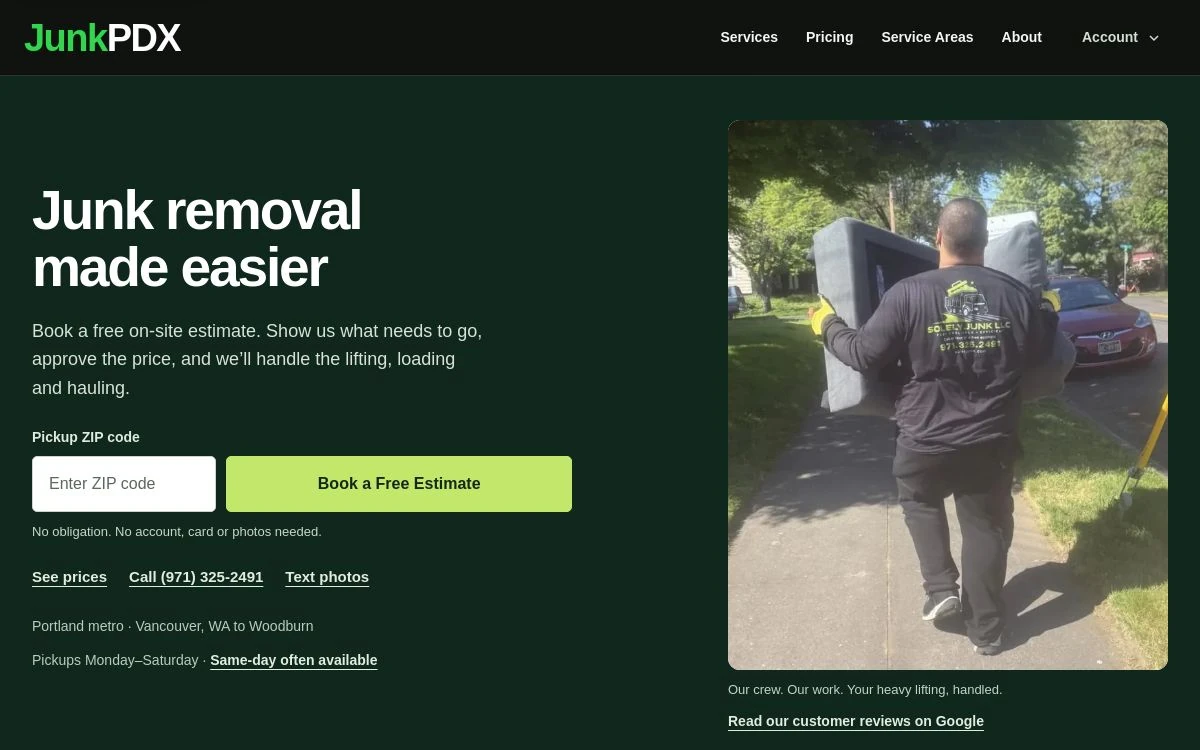
A home-service website needs to answer practical questions: do you handle this job, do you cover this address, and how does someone get an estimate? PDX Web Designer builds around those decisions for Portland-area service businesses and contractors, drawing on Alex’s experience running JunkPDX.
For a service business that needs customers to understand the job before requesting a quote: junk removal, cleaning, property care, packing labor, or contracting work. We plan around your actual services, qualifications, operating area, and way of scheduling.
SEE THE IDEA IN ACTION
Business websites: an interactive example.
Try a service selector and see how a page can explain the work before someone makes an inquiry.
Give each main service enough context to help someone recognize their situation. For a cleanout, that can mean access, the amount to remove, photos, and how the estimate visit works. A contractor may need to show project types and a consultation process. We use your real inclusions, exclusions, qualifications, and pricing approach, with details you approve.
Use real work as the evidence.
Project photos are more useful when the visitor knows what happened. Pair them with the type of job, the work completed, and any relevant access or preparation details. For before-and-after examples, explain the scope and use photos you have permission to publish. We can organize a few strong examples into service pages or individual project stories.
Make service areas practical.
Explain where you normally work and when a job needs coverage review. A list of city names alone cannot tell a customer whether a remote address or a particular service is available. We structure area information around your actual operation and link it to relevant services. Local project examples can add context where you have real work to show.
Build an estimate path your team can use.
Decide whether a submission requests a callback, asks for an estimate visit, or reserves an appointment. Ask for the details your team needs and clearly label what is optional. We check the agreed delivery path to an inbox or supported business tool, the confirmation the customer sees, and how a failed or repeated submission is handled. CRM connections can be scoped alongside the site.
DEFINED IN YOUR PROPOSAL
Know what you’re building.
Your proposal sets the deliverables, review rounds, timeline, ownership, and quote. Hosting, paid tools, and ongoing support are explained separately before work begins.
A page plan organized around your main services and real operating area
Responsive layouts with agreed business information, job photos, and project examples
A quote or booking path with clear estimate and confirmation expectations
Launch checks and a handoff covering access, hosting, and future content updates
FROM AN OPERATING BUSINESS
JunkPDX: from service information to an estimate
Alex’s own junk-removal business provides an example of clear pickup information, load-based pricing guidance, and an on-site approval process. Read how the service pages, pricing guidance, and estimate action fit together.
Yes, when the platform and available access support the changes. We can review service descriptions, project photos, mobile layouts, forms, and important existing URLs before deciding on focused improvements or a larger redesign. Useful existing content and working pages are identified in the scope.
PRICED CASE BY CASE
A useful starting point. Let’s talk it through.
Send your website, the services you want more inquiries about, your operating area, and a few photos of your own work. Tell Alex how a customer moves from first contact to an approved job. That gives us a useful basis for the page plan and quote.